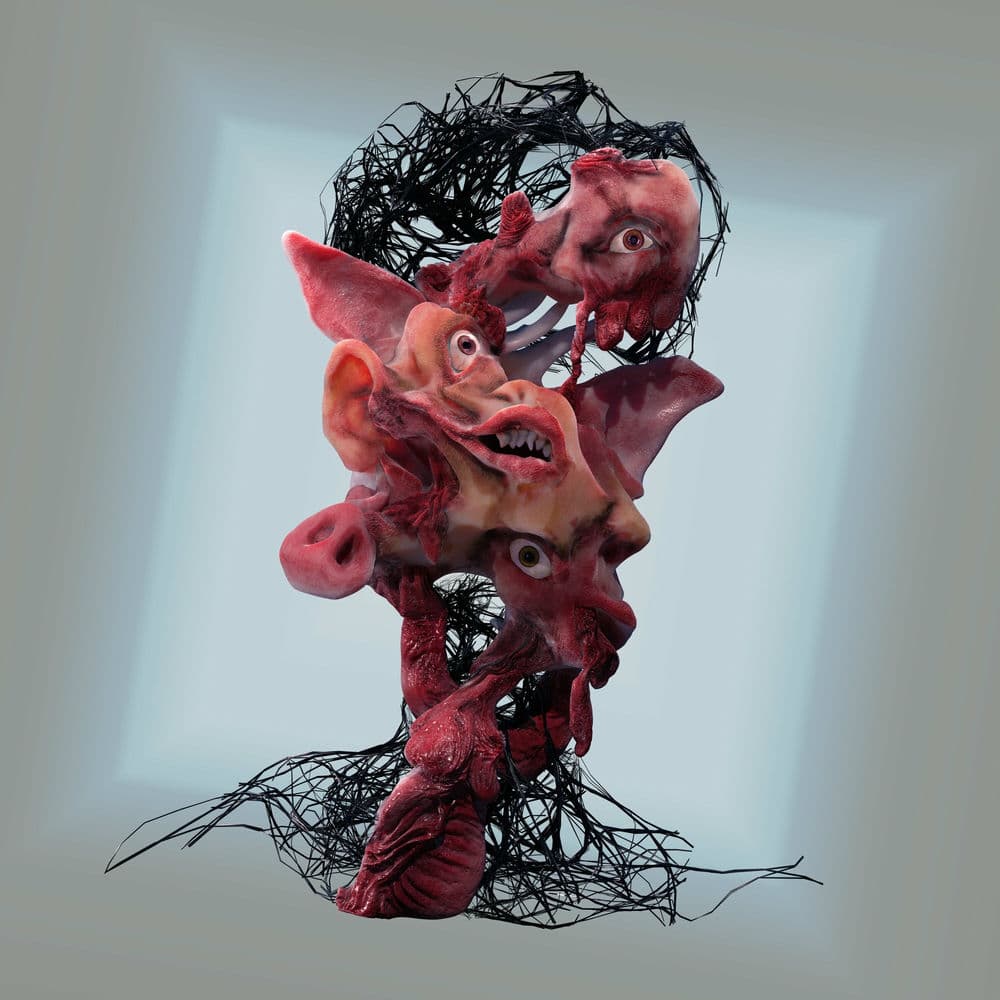
TL;DR "YE CHIZI MORD" is a visceral portrait of a psyche breaking under the weight of social alienation and self-deception. The speaker narrates a specific moment in time—"that day in me"—when something essential died, triggering a cascade of consequences: isolation, physical and emotional decay, and a violent confrontation with the hypocrisy of society. It is not a song of mourning, but of cold realization, where the death of innocence allows for a brutal awakening. The lyrics oscillate between self-loathing, nihilistic critique, and a hardened resolve to survive by any means necessary. Main themes The central theme is the death of an internal ideal or innocence, framed as a necessary casualty for survival. This is intertwined with extreme social alienation; the speaker feels severed from the collective, viewing society as a hostile entity that must be resisted or manipulated. Another major theme is the conflict between authenticity and performance. The speaker rejects the societal obsession with finding meaning ("everyone is searching for meaning"), exposing the fragility of human ego. The song also explores the theme of resilience through degradation—accepting humiliation now to win a larger war later. Story / speaker The narrative arc moves from a specific traumatic event to a broader philosophical stance. The speaker is an outcast who has been physically and spiritually broken ("society broke my foot, read my hand"). However, this brokenness becomes a source of power. The story begins with a mysterious death inside the self, moves through a phase of decay ("I rotted in the garden of silence"), and culminates in a declaration of war against societal norms. The speaker addresses an ambiguous "you"—perhaps a lover, a reflection, or a part of themselves—that they had to "kill" to stop being delusional. The repetition of the chorus suggests an incantation, a mantra to solidify this new, harsh reality. Key metaphors & imagery The song is rich in organic and violent imagery. "I rotted in the garden of silence" suggests a beautiful environment turned toxic due to lack of communication or life. The consumption imagery—"flesh eaten to the core" and "stolen even the seeds"—implies total depletion, a stripping away of all potential. "Crawling on my chest" describes a posture of defeat and survival, low to the ground. The recurring image of the "death" of something inside serves as the central metaphor for the loss of humanity or empathy. The final image of spitting on society and art ("Spit on society, spit on art, spit on poetry") represents a total rejection of cultural values. Mystery / subtext The primary mystery lies in the identity of the thing that died: "Something died that day in me." It is never named, allowing it to represent lost love, trust, ambition, or the soul itself. There is a subtext of guilt and justification; the speaker claims they "killed the deluded self" to save the "you," implying a violent intervention to wake someone up to reality. The line "Maybe that day you will be thankful to me" carries a chilling ambiguity—is this a prediction of gratitude for a harsh truth, or a delusion of grandeur? The refusal to name the disease ("our disease is incurable by choice, not for lack of treatment") suggests that the societal sickness is a voluntary condition, a collective refusal to accept the smallness of human existence. Emotional tone & mood The mood is claustrophobic, bitter, and intensely cynical. There is a sense of suffocation, mirrored by the inability to speak or control one's mouth. The tone shifts from despair to a cold, calculated aggression. It is defiant but weary; the speaker is tired of fighting small battles but is prepared to lose them to win the "big war." The atmosphere is heavy with the scent of decay and the metallic taste of blood and rage. Notable lines "I rotted in the garden of silence" captures the paradox of a silent, seemingly peaceful environment leading to rot. "Spit on society, spit on art, spit on poetry" is a nihilistic scream against the pillars of culture. "I am greedy and big" is a raw admission of ego and desire, stripped of moral pretense. "Maybe that day you will be thankful to me that I killed the deluded self in you" reveals the song's central, disturbing justification for violence as a form of salvation.